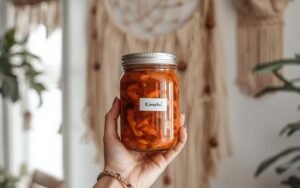
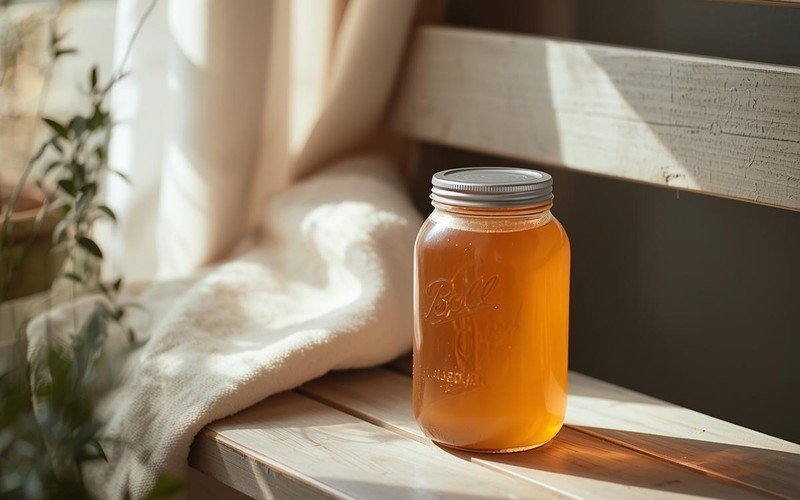
Kombucha is less a recipe and more a collaboration. You provide tea, sugar, time, and space. In return, fermentation transforms them into something living — lightly sparkling, gently tangy, and deeply refreshing.
Like all fermented foods, kombucha asks you to slow down and trust unseen processes. You don’t need to micromanage it or fully understand the microbiology. You just need to show up, keep things clean, and let the culture do what it’s been doing for centuries.
A Note on Fermentation
Kombucha undergoes lactic and acetic fermentation, driven by a SCOBY (a symbiotic culture of bacteria and yeast). Over time, sugars are converted into organic acids, trace alcohol, probiotics, and that signature sharp-yet-soft flavour.
The result is a drink that supports gut health, digestion, microbial diversity, and hydration — while also feeling grounding, alive, and far more interesting than anything from a bottle.
Why Brew Your Own?
Homemade kombucha gives you:
- Control over sweetness and acidity
- A richer probiotic profile
- Minimal waste and cost
- A ritual that reconnects you to time and care
It’s also endlessly adaptable — floral, fruity, herbal, sharp, soft — depending on how you finish it.
A Simple 5-Litre Kombucha Recipe
Ingredients
- 5 litres filtered water
- 8 black or green tea bags (or 8–10 tsp loose-leaf tea)
- 400g white sugar
- 1 healthy SCOBY
- 500ml unflavoured starter kombucha (from a previous batch or store-bought, raw)
Method
1. Brew the tea
Bring 3–4 litres of water to a boil. Remove from heat, add tea, and steep for 10–15 minutes. Dissolve the sugar fully while the tea is hot. This sugar feeds the fermentation — it won’t remain in its original form.
2. Cool completely
Add the remaining cold water to bring the total to 5 litres. Allow the tea to cool to room temperature. Heat and fermentation don’t mix.
3. Add the culture
Pour the cooled sweet tea into a large glass jar. Add the starter kombucha, then gently place the SCOBY on top. Cover with a breathable cloth and secure with a band.
4. Ferment
Leave the jar at room temperature, out of direct sunlight, for 7–14 days. Taste from day 7 onward. You’re looking for a balance of tangy, slightly sweet, and softly acidic.
When it tastes right to you, it’s ready.
Second Fermentation (Optional, but Worth It)
This is where kombucha becomes expressive.
Transfer the kombucha into bottles, leaving a little space at the top. Add flavour if desired:
- Ginger + lemon for brightness
- Berries for depth and colour
- Hibiscus for floral sharpness
- Herbs like rosemary or mint for freshness
Seal and leave at room temperature for 2–4 days to build natural carbonation, then refrigerate.
How the Flavour Evolves
- Early: lightly sweet, fresh tea notes
- Mid-stage: balanced, gently sour, lightly fizzy
- Longer ferment: drier, sharper, more complex
There’s no correct point — only preference.
A Final Thought
Brewing kombucha is an act of quiet faith. You prepare, you wait, you taste, you adjust. You let life do its thing. In a world that rewards urgency, fermentation reminds us that some of the best outcomes arrive slowly — and can’t be rushed.