
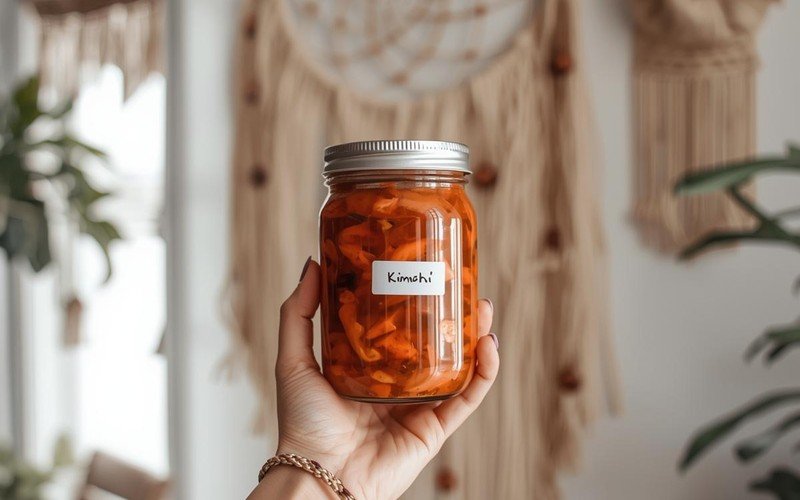
Kimchi isn’t just a recipe; it’s a relationship with time. You don’t rush it, you don’t control it too tightly, and you don’t need to fully understand the science for it to work. Fermentation does the heavy lifting for you, quietly transforming humble vegetables into something complex, alive, and deeply nourishing.
At its core, kimchi relies on lactic (often mistakenly called malolactic) fermentation – a natural process where beneficial bacteria convert sugars into lactic acid. This acidification preserves the vegetables, builds flavour, and creates the signature tang and gentle fizz that fermented foods are loved for.
The result? A flavour profile that’s spicy, sour, savoury, slightly funky and endlessly addictive – with benefits that go far beyond taste.
A Simple, Mindful Kimchi Recipe
Ingredients
- 1 medium Napa cabbage
- 2 tbsp sea salt
- 3–4 cloves garlic
- 1 thumb-sized piece of ginger
- 1–3 tbsp Korean chilli flakes (gochugaru), to taste
- 1 tbsp fish sauce or soy sauce
- 2 spring onions, sliced
- Optional additions: grated carrot, daikon radish, apple or pear for subtle sweetness
Method
1. Salt the cabbage
Chop the cabbage into bite-sized pieces and place it in a large bowl. Sprinkle evenly with salt and gently massage it in. Let it rest for 1–2 hours, turning occasionally, until the leaves soften and release liquid. This step creates the environment that fermentation needs to thrive.
2. Rinse and drain
Rinse the cabbage lightly to remove excess salt, then drain well. You want it seasoned, not briny.
3. Make the paste
Blend or crush the garlic and ginger into a rough paste. Stir in the chilli flakes and fish sauce or soy sauce. This paste is the heart of kimchi: warming, spicy, and deeply aromatic.
4. Combine
Mix the paste through the cabbage using clean hands, adding spring onions and any optional vegetables. Take a moment here – smell it, taste it, adjust heat or salt if needed.
5. Pack and ferment
Pack the mixture tightly into a clean jar, pressing it down so the vegetables sit beneath their own juices. Leave a little space at the top. Seal loosely and let it ferment at room temperature for 2–5 days, opening daily to release pressure.
Taste as you go. When it’s pleasantly sour and complex, move it to the fridge to slow fermentation.
Flavour Notes & How It Evolves
- Day 1–2: Fresh, spicy, lightly salty
- Day 3–5: Tangy, savoury, balanced heat
- Week 2+: Deeper funk, richer umami, softer spice
Kimchi continues to change – much like taste, mood, and seasons. There’s no single “perfect” point, only preference.
A Final Thought
Making kimchi teaches patience. You prepare, you wait, you trust unseen processes. In return, you get something alive – a food that nourishes not just the gut, but the ritual of slowing down and letting nature do what it does best.